
- Home
- Artists & Makers
- Sir Edwin Landseer
Sir Edwin Landseer
1802 - 1873
Sir Edwin Henry Landseer RA (7 March 1802 - 1 October 1873) was one of the most celebrated British artists of the 19th century, renowned above all for his unrivalled skill as an animal painter. His work had a uniquely broad appeal, finding its way into both middle-class homes and aristocratic collections. Queen Victoria herself commissioned numerous paintings, and from 1836 onward Landseer enjoyed regular royal patronage.
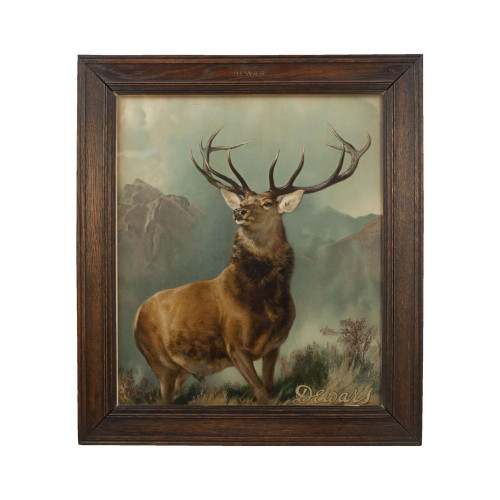
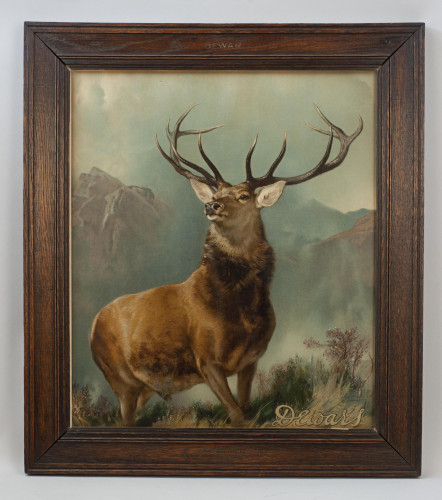
Landseer first visited Scotland in 1824 and became deeply inspired by the Highland landscape. These visits influenced many of his later masterpieces, including the iconic Monarch of the Glen. His sensitivity to animal form and character-combined with the dramatic setting of the Highlands-helped cement his reputation as the foremost animal painter of his time.
The youngest son of the engraver John Landseer A.R.A., Edwin was trained by his father as well as by several prominent artists, including the historical painter Benjamin Robert Haydon, who encouraged him to study animal anatomy. His talent emerged early: he exhibited at the Royal Academy's Summer Exhibition in 1815 and entered the Royal Academy Schools the following year. Rapid professional success followed. He became an Associate of the Royal Academy in 1826 at the age of 24, was elected a full Academician in 1831 before turning 30, and was knighted in 1850. In 1866 he declined the presidency of the Royal Academy.
Despite personal struggles-including a breakdown in 1840 that led to ongoing battles with depression and ill health-Landseer continued to produce exceptional work throughout his life. Among his most famous
Sir Edwin Henry Landseer RA (7 March 1802 - 1 October 1873) was one of the most celebrated British artists of the 19th century, renowned above all for his unrivalled skill as an animal painter. His work had a uniquely broad appeal, finding its way into both middle-class homes and aristocratic collections. Queen Victoria herself commissioned numerous paintings, and from 1836 onward Landseer enjoyed regular royal patronage.
Landseer first visited Scotland in 1824 and became deeply inspired by the Highland landscape. These visits influenced many of his later masterpieces, including the iconic Monarch of the Glen. His sensitivity to animal form and character-combined with the dramatic setting of the Highlands-helped cement his reputation as the foremost animal painter of his time.
The youngest son of the engraver John Landseer A.R.A., Edwin was trained by his father as well as by several prominent artists, including the historical painter Benjamin Robert Haydon, who encouraged him to study animal anatomy. His talent emerged early: he exhibited at the Royal Academy's Summer Exhibition in 1815 and entered the Royal Academy Schools the following year. Rapid professional success followed. He became an Associate of the Royal Academy in 1826 at the age of 24, was elected a full Academician in 1831 before turning 30, and was knighted in 1850. In 1866 he declined the presidency of the Royal Academy.
Despite personal struggles-including a breakdown in 1840 that led to ongoing battles with depression and ill health-Landseer continued to produce exceptional work throughout his life. Among his most famous
public commissions are the monumental bronze lion sculptures in London's Trafalgar Square, modelled in the 1860s and unveiled in 1867. Today, his art remains synonymous with Victorian Britain's fascination with animals, drama, and the grandeur of the natural world.
1 ITEM
Please create wishlist to add this item to
